
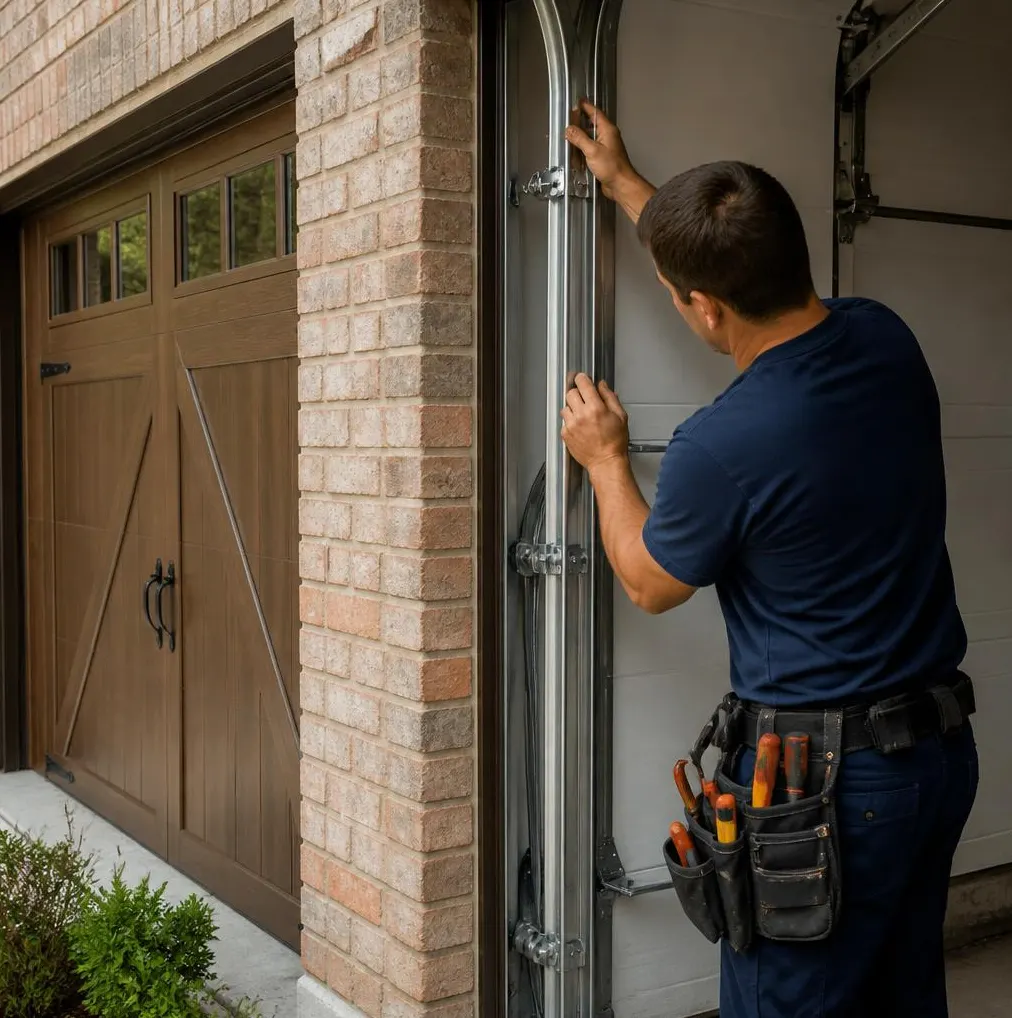
What We See on a Typical Fall Service Call
By the time a technician gets a call this time of year, it's usually one of two things: tracks packed with pine straw and pollen film that built up all summer and never got cleaned off, or a door that's suddenly noisy because rollers and hinges dried out after months of heat and humidity. Neither problem started overnight. A quick seasonal check catches both before they turn into a stuck door or a 2 AM opener failure during the first cold snap.
Tools You'll Need
- Work gloves
- Flashlight
- A stepladder
- A socket wrench or adjustable wrench
- Silicone-based garage door lubricant (not WD-40 or grease)
- A soft brush or old rag
- A level (a smartphone level app works fine)
The 20-Minute Routine
1. Look at the Tracks (5 minutes)
Run a flashlight along both tracks from the floor up. After a humid summer with heavy rain, it's common to find pollen residue turned sticky, pine needles wedged in the track, or a light film of rust starting at the base where water pools. Wipe tracks clean with a dry rag. Don't bend or pry on the track itself — that's a technician job.
2. Test the Balance (3 minutes)
With the door closed, disconnect the opener by pulling the release cord. Lift the door manually about halfway and let go. A properly balanced door stays put. If it drifts up or crashes down, the springs are compensating incorrectly for the door's weight. Stop here — this is a spring tension issue, not a DIY fix.
3. Check the Safety Sensors (3 minutes)
Wipe the small sensor eyes near the bottom of each track with a soft cloth. Pollen and dust settle on these lenses and can cause the door to reverse unexpectedly or refuse to close. Reconnect the opener and run the door through a full cycle, waving a broom handle in the sensor beam to confirm it reverses.
4. Lubricate Moving Parts (4 minutes)
Apply a light coat of silicone-based lubricant to the rollers, hinges, and the opener's chain or screw drive. Skip the springs and cables entirely — those need a technician's eye, not homeowner lubrication, since over-oiling or touching a wound spring is genuinely dangerous.
5. Check Hardware and Weatherstripping (3 minutes)
Using the wrench, snug up any visibly loose bolts on the track brackets (don't overtighten). Then inspect the rubber weatherstripping along the bottom and sides of the door. After a summer of heat expansion and heavy rain, it's common to find it cracked, pulled loose, or compressed flat — worth noting now, since a tight seal matters once ice storms or wind-driven rain show up later in the season.
6. Test the Opener and Backup (2 minutes)
Replace the remote and keypad batteries if you haven't this year, and confirm the manual release handle moves freely. If you lose power during a storm, you'll want that release working without a fight.
Where the Line Is
Homeowners can safely clean, lubricate, tighten visible hardware, and test balance and sensors. What needs a technician: any spring or cable work, track realignment, opener force/limit adjustments, or a door that's off-balance, grinding, or slow to respond. Those involve tension and calibration that aren't worth guessing at.
When to Call Palmetto Garage Door
If your balance test failed, the door is noticeably off-track, or weatherstripping is too far gone to just patch, that's when it's time to call us. We handle garage door maintenance visits that cover full-system inspections, and if your check turned up a spring that's clearly worn or mismatched, our spring replacement service gets it done safely and correctly the first time — important before winter puts more strain on a door that's already working hard.
If you're anywhere in Palmetto, Fairburn, Union City, Newnan, Tyrone, Peachtree City, Chattahoochee Hills, or Fayetteville and your fall checkup turned up something beyond a wipe-down, give Palmetto Garage Door a call — we'll get it sorted before the weather turns.