
Short answer: a standard home inspection covers whether the garage door opens and closes, but it rarely tests balance, spring condition, or how the door has held up to Georgia humidity and pollen. That gap can cost you a $200 tune-up or a $1,500 spring-and-opener replacement, and you won't know which until you look closer. Here's the walkthrough to do yourself before closing, or to ask the inspector to do in front of you.
1. Disconnect the Opener and Lift the Door by Hand
Pull the red release cord so the opener is out of the equation, then lift the door halfway and let go. A properly balanced door stays put. If it drops like a stone or shoots upward, the torsion springs are worn out or sized wrong for the door's weight. This is the single most common thing inspectors skip, because the door still "works" fine with the opener doing all the heavy lifting. A failed balance test means spring replacement is coming soon, and it's not a DIY job — these springs are under enough tension to cause serious injury.
2. Look at the Springs Themselves
With the door closed, check the torsion spring above the door (or the side-mounted extension springs on older setups) for rust, stretched coils, or a visible gap where a spring has separated. Humidity and the occasional ice storm we get here take a toll on exposed metal faster than people expect. Surface rust alone isn't a dealbreaker, but pitting or a spring that looks stretched compared to its neighbor means it's near the end of its cycle life.
3. Check the Bottom Panel and Bottom Seal
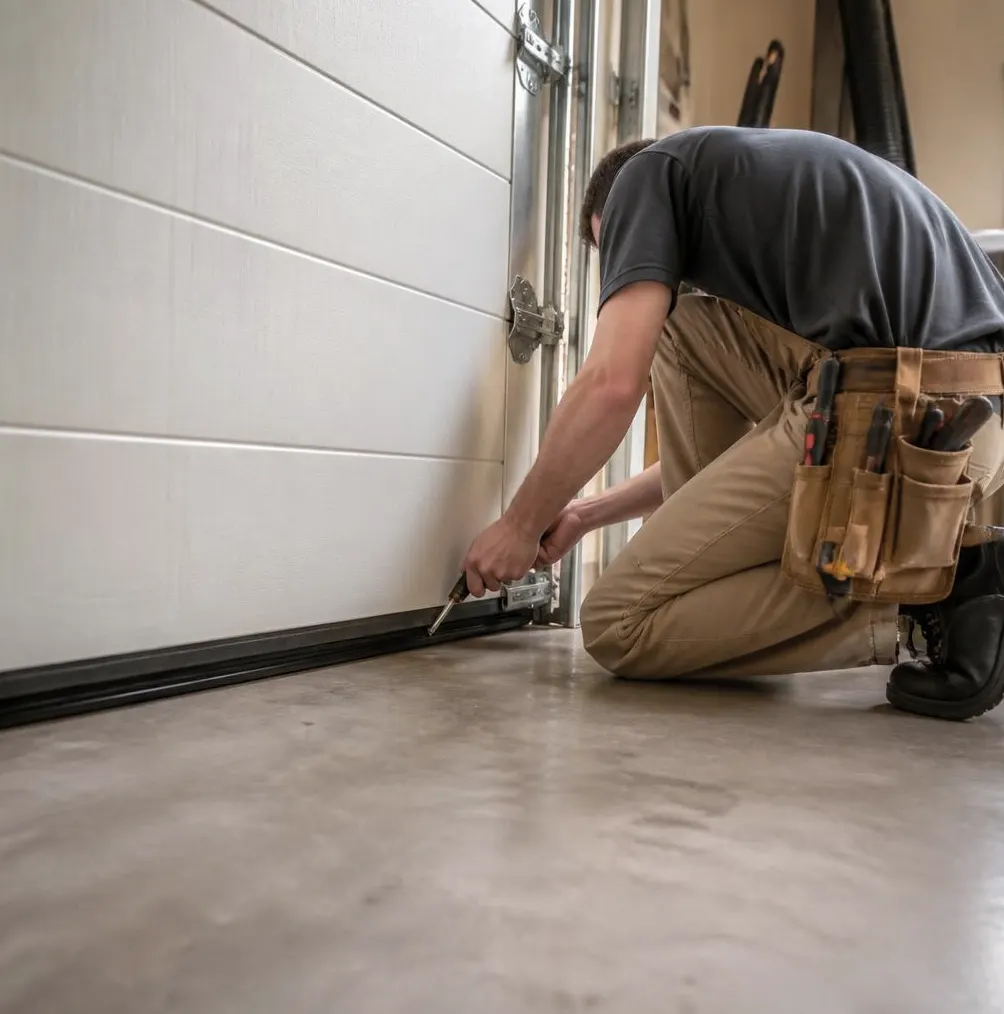
Crouch down and look at the bottom 12 inches of the door, inside and out. This is where splashback from heavy rain and lawn irrigation does the most damage — rust bubbles on steel doors, soft or delaminating spots on wood or composite doors. Then check the rubber weather seal along the bottom edge. Cracked, flattened, or missing seal means pollen, water, and even small critters have been getting in, and it's an easy fix, but a door that's been sitting in standing water for years may have a bottom panel that needs replacing regardless of how the seal looks.
4. Run Your Hand Along the Tracks
The vertical and horizontal tracks should be straight, tightly bolted, and free of dents. Grab the track and try to wiggle it — any give at the mounting brackets means fasteners have worked loose, often from years of door cycling or a prior minor impact (a car bumper, a basketball). Bent tracks don't always announce themselves with obvious noise; sometimes the door just runs a little rough and nobody thinks much of it until a roller jumps the track entirely.
5. Spin Each Roller
Rollers should turn freely and not wobble side to side. Nylon rollers (quieter, common on newer doors) crack over time; steel rollers wear down at the bearing and start sounding like a shopping cart wheel. If more than two or three rollers look worn, plan on replacing the full set rather than one at a time — it's more efficient and keeps the door running evenly.
6. Test the Safety Reverse
Set a 2x4 flat on the ground where the door closes and trigger it. The door should reverse the instant it touches the wood. Then wave your hand in front of the photo-eye sensors near the bottom of the tracks while the door is closing — it should stop and reverse without contact. If either test fails, the opener's safety system is not working, which is a liability issue, not just an inconvenience, especially in a household with kids or pets.
7. Check the Opener's Age and Condition
Look for a model/serial sticker on the opener unit. Openers typically last 10-15 years, and a unit that age may lack rolling-code security or battery backup — worth knowing if the area loses power during storm remnants that push up from the coast. Listen for grinding or straining during operation; it often means the drive gear or belt is wearing out, separate from the door itself.
8. Look at the Slab and Surrounding Framing
Check whether the garage floor slopes toward the door opening (it should, for drainage) and look at the wood framing around the opening for water staining or soft spots. Pine debris and moisture tend to collect right at the base of garages here, and if the framing has been wet repeatedly, it can affect how well the door seals and how the track brackets hold over time.
When to Call Palmetto Garage Door
If you walk through this list and find a door that's out of balance, springs that look worn, or an opener failing the safety reverse test, it's worth getting a second opinion before closing — or right after, if you've already got keys. Palmetto Garage Door handles spring replacement and full garage door opener repair and installation for homes throughout Palmetto, Fairburn, Union City, Newnan, Tyrone, Peachtree City, Chattahoochee Hills, and Fayetteville, and we're glad to do a pre-purchase or post-closing inspection so you know exactly what you're working with.
If you're buying a home in the 30268 area or anywhere south of Atlanta and want a straight answer on what your garage door needs, give Palmetto Garage Door a call. We'll tell you what's fine, what's worth fixing now, and what can wait.